
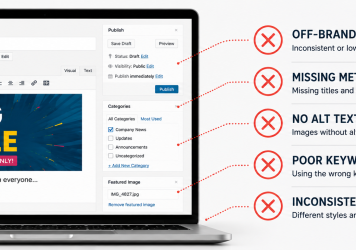
Why Image File Names Matter More Than You Realize
One of the most overlooked SEO mistakes on business websites has nothing to do with keywords, backlinks, or website design.
It’s image filenames.
Every day, businesses upload images to their website with names like:
❌ IMG_9384.jpg
❌ AI-image-7.jpg
❌ screenshot-final-final-final.png
❌ photo-new-2-copy.jpg
The problem is that Google sees those filenames too.
When search engines crawl your website, they are trying to understand every part of the page:
• the written content
• headings
• metadata
• internal links
• alt text
• and yes, image filenames
While image names alone will not suddenly rank a website on page one, they are one of many cumulative signals that help search engines and AI systems better understand your content.
A descriptive image filename helps connect the image to:
✔ the topic of the page
✔ the services being offered
✔ the location being targeted
✔ the industry being discussed
✔ the overall relevance of the website
For example:
Instead of:
❌ AI-image-7.jpg
Use:
✅ calgary-utility-locator-equipment.jpg
Now Google immediately understands:
• this image is related to utility locating
• the business operates in Calgary
• the image likely relates to utility locating equipment or services
That creates a much stronger contextual signal for SEO.
The same principle applies across industries:
Interior Design:
✅ calgary-interior-designer-luxury-living-room.jpg
Technology:
✅ fiber-optic-network-installation-alberta.jpg
Professional Services:
✅ workplace-investigation-consulting-team.jpg
Kids Camp:
✅ kids-food-art-camp-calgary-summer-activity.jpg
Proper image naming also improves:
• Google Image Search visibility
• accessibility tools and screen readers
• website organization
• media library management
• future content updates
• AI search interpretation
This is becoming even more important as AI-driven search engines and AI Overviews continue evolving. AI systems analyze website structure differently than traditional search engines. Clear, descriptive assets help improve how content is categorized and referenced.
There is also an operational benefit.
Imagine trying to manage a website with 600 images named:
• IMG_4472.jpg
• image2-final.jpg
• final-banner-new.jpg
Now compare that to a properly organized media library with clear naming conventions. It becomes dramatically easier for:
• marketing teams
• web developers
• SEO specialists
• content writers
• future staff members
to locate and reuse assets efficiently.
A good SEO image filename structure should:
✔ use lowercase letters
✔ separate words with hyphens
✔ describe the image clearly
✔ include keywords naturally
✔ include location references when relevant
✔ avoid spaces, symbols, and random numbering
What businesses should avoid:
❌ keyword stuffing
❌ excessively long filenames
❌ generic naming
❌ duplicate filenames
❌ uploading AI-generated images without renaming them
This does not mean every image needs a perfect SEO strategy behind it. The goal is clarity and consistency.
Think of it like organizing a filing cabinet.
“Document 7” tells nobody anything.
“calgary-utility-locator-equipment.jpg” immediately provides context.
Small details like this may seem insignificant on their own, but strong SEO performance is often the result of hundreds of small optimizations working together consistently over time.
Most businesses focus only on the visible parts of a website.
The businesses that perform well long-term usually pay attention to the invisible details too.
At SmartMarket Solutions, we help businesses improve not only how their websites look, but how they are understood by search engines, AI systems, and potential customers.
Send us a note, we’d love to help.
Why Image File Names Matter More Than You Realize
One of the most overlooked SEO mistakes on business websites has nothing to do with keywords, backlinks, or website design. It’s... read more
Components That Make Up a Brand
A brand is a complex concept that encompasses various elements, both tangible and intangible. Here are the key components that make... read more
What are Keywords?
Keywords are specific words or phrases that people use when searching for information on search engines like Google, Bing, or... read more
Essential Skills Business Owners Should Possess
Running a successful business requires a diverse set of skills and expertise. From managing finances to building a strong team,... read more
What the Heck is Search Engine Marketing?
Search Engine Marketing (SEM) is a digital marketing strategy that increases search traffic to a website. Companies pay to have... read more
Setting Specific, Measurable Digital Marketing Goals
Specific, measurable, achievable, relevant, and time-bound (SMART) goals are crucial for effective digital marketing. They serve as the foundation for... read more
5 Important Features of Social Media Posts
Effective social media posts share several common features that help them engage with the audience. Here are five important features... read more
Product-Based Versus Service-Based Businesses
In the world of business, there are two primary types of companies: product-based businesses and service-based businesses. While both types... read more